Fresh daily
AI News
Latest AI tool releases, research breakthroughs, and industry news.
Older
Fable's judgement
One of the most interesting tips I got from the Fireside Chat I hosted with Cat Wu and Thariq Shihipar from the Claude Code team at AIE on Wednesday was to let Fable (and to a certain extent Opus) use their own judgement rather than dictating how they should work. The example they gave was testing. You can tell Fable "only use automated testing for larger features, don't update and run tests for small copy or design changes" - but it's better to just tell Fable to use its own judgement when deciding to write tests instead. Jesse Vincent just gave me a related tip to help avoid burning too many of those valuable Fable tokens in the few days we have left before the prices go up. Tell Fable to use other models for smaller tasks, applying its own judgement about which model to use. I prompted Claude Code just now with: For all coding tasks use your judgement to decide an appropriate lower power model and run that in a subagent Claude saved this memory file in ~/.claude/projects/name-of-project/memory/delegate-coding-to-subagents.md : --- name: delegate-coding-to-subagents description: Simon wants coding tasks delegated to subagents running an appropriately lower-power model metadata: node_type: memory type: feedback originSessionId: 30068d78-43a9-4fb1-bb29-9799e18c526a --- Stated by Simon on 2026-07-03: "For all coding tasks use your judgement to decide an appropriate lower power model and run that in a subagent." Why: cost/efficiency — implementation work rarely needs the top-tier model; judgment, review, and synthesis stay with the main loop. How to apply: when a task in this project is primarily writing/editing code, spawn an Agent with a model override (sonnet for substantive implementation, haiku for trivial/mechanical edits) and a self-contained prompt; review the result in the main loop before committing. Design, auditing, data synthesis, and anything judgment-heavy stays in the main model. See also [[project-goals]]. So far it seems to be working well. I'm getti
The browser wars aren’t about search anymore — here are the best alternatives to Chrome and Safari
We’ve compiled an overview of some of the top alternative browsers available today aiming to challenge Chrome and Safari.
June 2026 newsletter
The June edition of my sponsors-only monthly newsletter is out. If you are a sponsor (or if you start a sponsorship now) you can access it here . This month: Claude Fable 5, GPT-5.6, and US export restrictions GLM-5.2 is the new best open weights model Tokenmaxxing is so over Datasette Apps sqlite-utils and shot-scraper and Datasette Miscellaneous WASM projects Other model releases What I'm using Here's a copy of the May newsletter as a preview of what you'll get. Pay $10/month to stay a month ahead of the free copy! Tags: newsletter

Google DeepMind and A24 announce first-of-its-kind research partnership

Anthropic wants to develop its own drugs
At the event "The Briefing: AI for Science" earlier this week, Anthropic announced Claude Science, a new "AI workbench for scientists" that pulls fragmented tools and datasets into one environment, and generates figures and visuals. Anthropic, already dominating the industry with its popular coding tools and powerful AI models, framed the launch around what it says is AI's potential to "dramatically accelerate the pace of scientific discovery and the development of healthcare interventions," and touted a long list of biotech and pharma customers already using Claude. Anthropic also went a step further, saying it would develop drugs of its … Read the full story at The Verge.

A behind-the-scenes look at Midjourney’s medical scanner leaves many questions unanswered
A scan of an imaging phantom, segmented to validate how cleanly structures separate under controlled conditions. | Image: Midjourney Medical Midjourney has shown more of its futuristic medical scanner. It still hasn't shown much proof it works. The AI startup, best known for generating images, released a behind-the-scenes video of its dunk-tank ultrasound scanner, which it plans to deploy in spas and hopes will transform medicine with cheap, detailed, radiation-free imaging. The nearly 20-minute tour comes from tech YouTuber Marcin Plaza, who also happens to be an engineer at the company. Plaza frankly describes the scanner as scores of ultrasound probes "hacked apart and slapped on a glorified hot tub with an elevator in it," connected to off-the-shelf computers and Raspberry … Read the full story at The Verge.
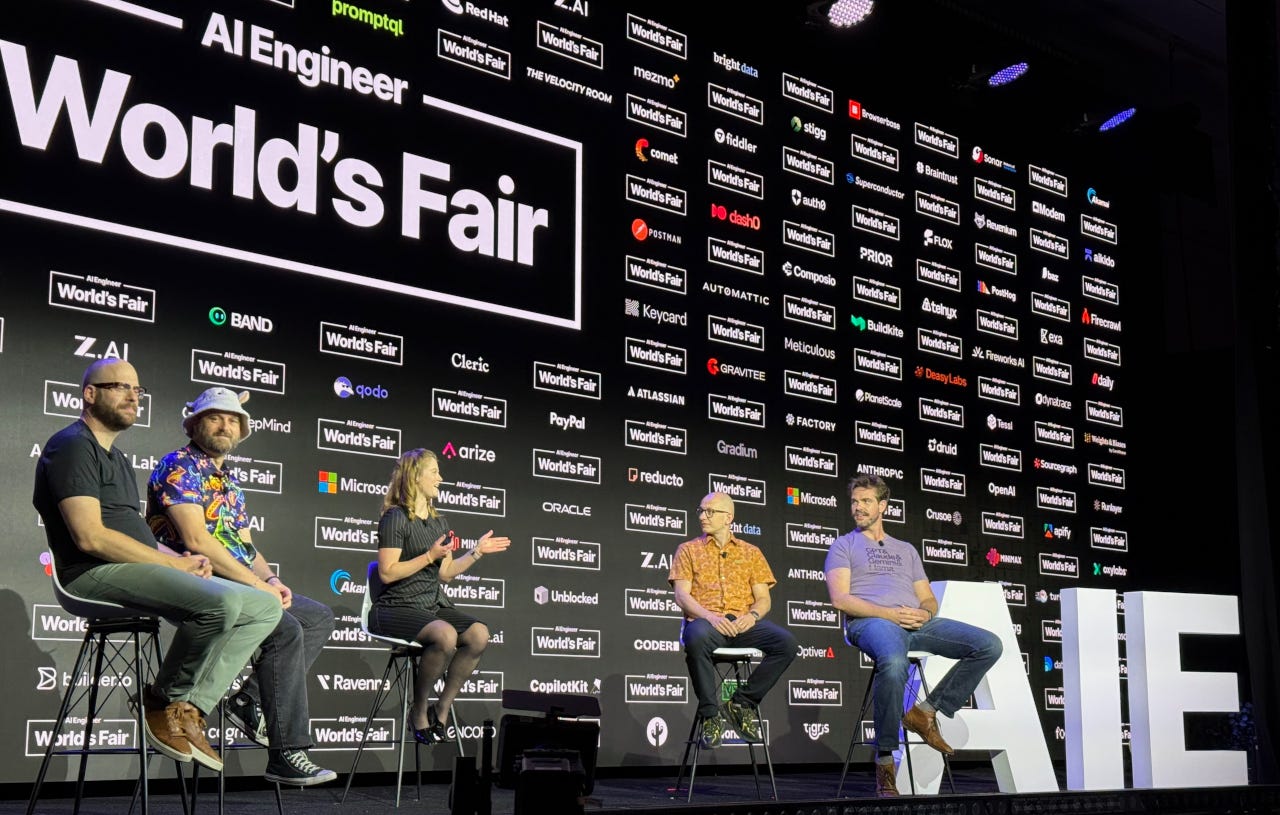
AIEWF Daily Dispatch: The great loops debate and the state of AI engineering
The AI Engineer World’s Fair ended with a debate about loops, a report on the state of AI engineering, and closing keynotes focused on what to build next.
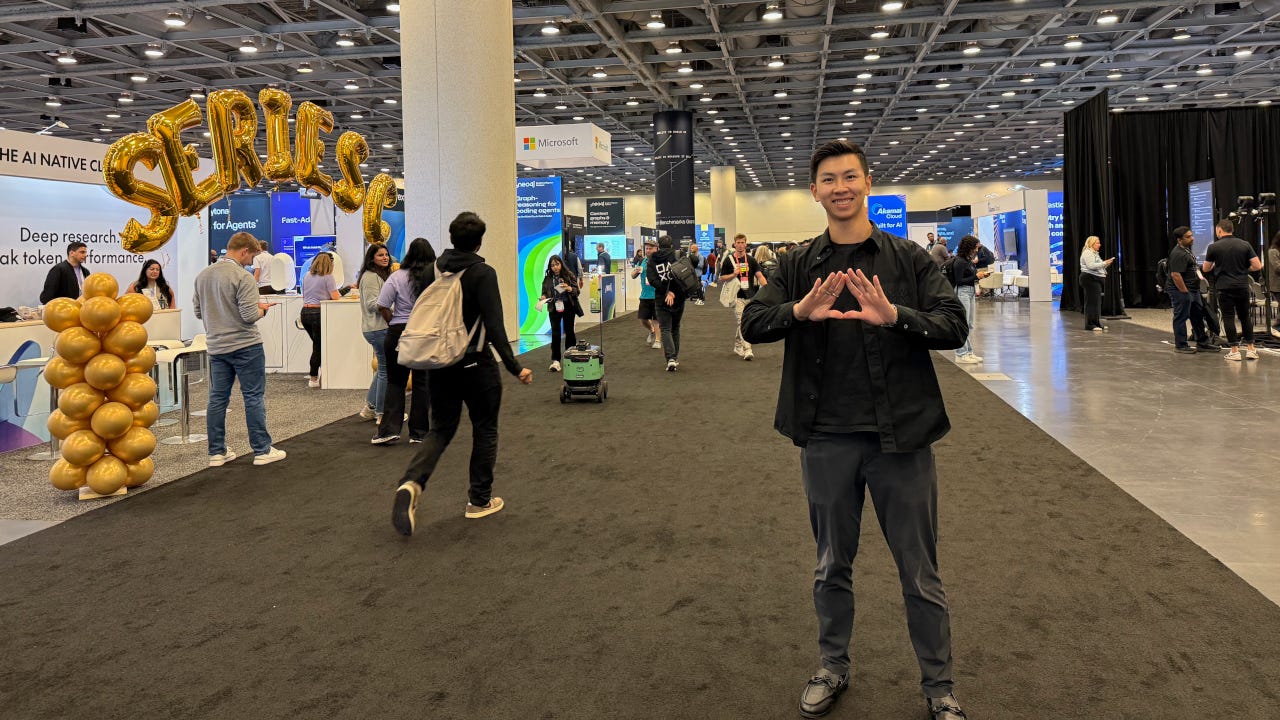
Vercel's Andrew Qu on why agents are a new kind of software
The Vercel Chief of Software explains how its agent framework, eve, was created — and why skills, sandboxes and agent-readable websites now matter.
Mark Zuckerberg tells staff that AI agents haven’t progressed as quickly as he’d hoped
At an internal meeting, the Meta CEO reportedly said that AI development efforts were not moving as quickly as anticipated.
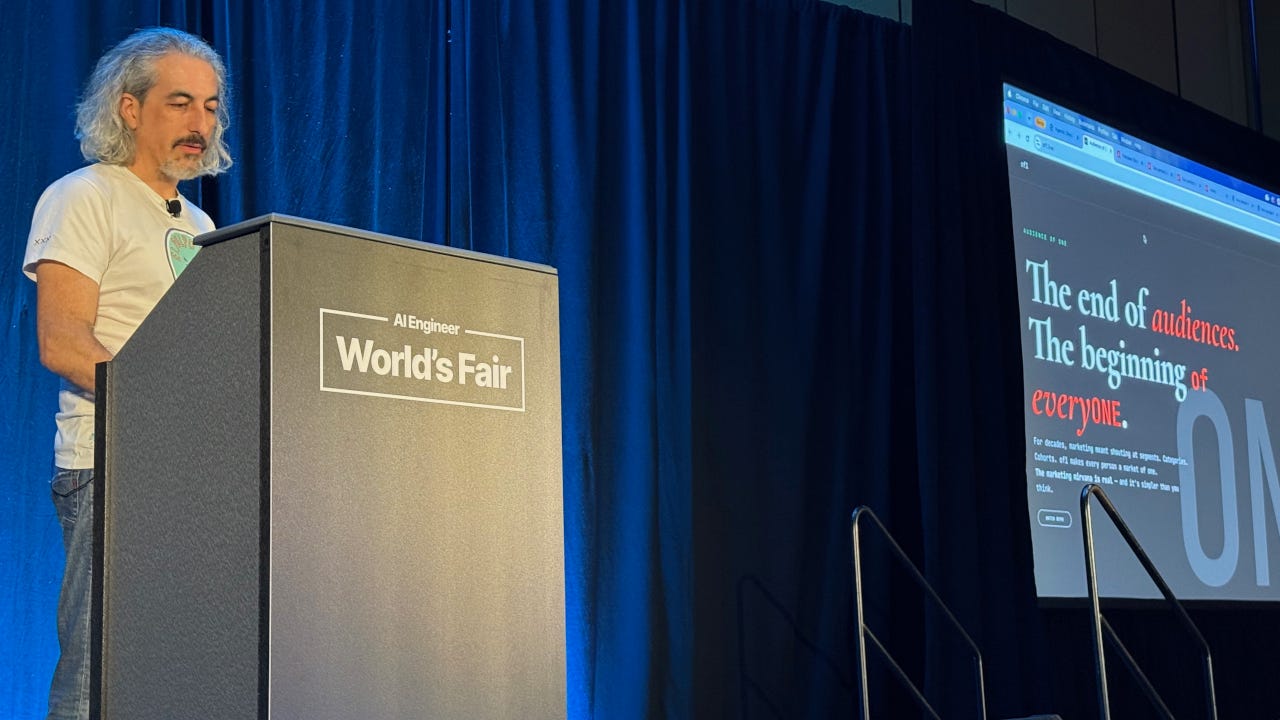
The website of the future may assemble itself for every visitor
Adobe is experimenting with “agentic sites” that generate pages around an individual user’s intent. At AIEWF, we talked to Carlos Sanchez about the Web's future.

Jersey Mike’s IPO illustrates how bad the AI hype has become
Just for kicks, I took a look at Jersey Mike's IPO documents. Surely a sandwich shop would have no need to mention AI. But low and behold.

Newly discovered PamStealer isn't your typical macOS malware
The discovery underscores the increased effort being poured into Mac infostealers.
llm-coding-agent 0.1a0
Release: llm-coding-agent 0.1a0 Another Fable 5 experiment. Now that my LLM library has evolved into more of an agent framework it's time to see what a simple coding agent would look like built on it. I started a new Python library using my python-lib-template-repository GitHub template repository, then ran these two prompts (here's the Claude Code for web transcript ): Write a spec.md for this project - it will depend on the latest “llm” alpha from PyPI and implement a Claude code style coding agent complete with tools for reading and editing files and executing commands Then: Commit the spec, then build it using red/green TDD in a series of sensible commits (each with passing tests and updated docs) - occasionally manually test it using the OpenAI API key in your environment Here's the resulting README file and the sequence of commits . I've shipped a slop-alpha to PyPI, so you can run the new agent like this: uvx --prerelease=allow --with llm-coding-agent llm code It's pretty good for a first attempt! Here's the (Fable-authored) README , which lists recipes like llm code --yolo and llm code --allow "pytest*" --allow "git diff*" . It also presents a Python API based around a CodingAgent(model="gpt-5.5", root="/path", approve=True).run("Fix the failing test in tests/test_parser.py") class which I didn't ask for but I'm delighted to see implemented. Here's the suite of tools it implemented , listed using uvx ... llm tools : CodingTools_edit_file(path: str, old_string: str, new_string: str, replace_all: bool = False) -> str Replace an exact string in a file. old_string must match the file contents exactly (including whitespace) and must identify a unique location unless replace_all is true. Returns a diff of the change so it can be verified. CodingTools_execute_command(command: str, timeout: int = 120) -> str Run a shell command in the session root directory. Returns combined stdout and stderr followed by an Exit code line. timeout is in seconds (maximum 600); on tim

Meta quietly launches vibe-coded gaming app Pocket
Meta has quietly launched Pocket, an experimental AI app that lets users generate and share interactive mini games using text prompts.

Anthropic is discussing a new custom chip with Samsung
The news comes about a week after OpenAI announced its own custom AI chip in a partnership with Broadcom.
Using DSPy to evaluate and improve Datasette Agent's SQL system prompts
Research: Using DSPy to evaluate and improve Datasette Agent's SQL system prompts One of this morning's AIE keynotes covered dspy , which reminded me I've been meaning to see if it could help me improve the system prompt used by Datasette Agent - so I fired off an asynchronous research task in Claude Code for web using Claude Fable 5: Pip install the latest Datasette alpha and datasette-agent and dspy - then figure out how to use dspy to evaluate and improve the main system prompts used by Datasette Agent for the feature where it can execute read only SQL queries to answer user questions about data. Fable chose to test using GPT 4.1 mini and nano, and identified several promising looking directions for improvements. I particularly like this one: The schema listing gives only table names; the "don't call describe_table if you already have the information" advice caused column-name guessing (page_count, o.order_id, first_name) and error-retry loops in baseline traces. Either include column names in the prompt's schema listing or soften that advice. Tags: ai , datasette , generative-ai , llms , evals , dspy , datasette-agent , claude-mythos

How GitHub used secret scanning to reach inbox zero
GitHub had 20,000+ secret scanning alerts across 15,000 repositories. Here's how we separated signal from noise, built remediation workflows, and reached inbox zero in nine months. The post How GitHub used secret scanning to reach inbox zero appeared first on The GitHub Blog.

Achieving operational excellence with AI
Frameworks like Lean Six Sigma and business process management (BPM) first gained traction because they promised clarity in the chaos—a structured way to bring order to messy, sprawling operations. Lean Six Sigma emphasized statistical rigor and quality control; BPM created end-to-end maps of how work should flow across departments. Both offered a repeatable way to…

OpenAI proposed donating 5% of its equity to a US sovereign wealth fund
OpenAI CEO Sam Altman has reportedly proposed giving 5% of the company’s equity to a U.S. sovereign wealth fund, reviving discussions about letting the public share in the financial gains from the AI boom.
Trump gets OpenAI to offer US 5% stake, far lower than Sanders’ target
Insiders say Sam Altman is in active talks with the Trump administration.