Fresh daily
AI News
Latest AI tool releases, research breakthroughs, and industry news.
Older
GPT-5.5 Bio Bug Bounty
Details about the OpenAI Bio Bounty program
Google’s deepfake detector system used to debunk McConnell hoax pic
Earlier this week, a picture that seemed to show Kentucky Senator Mitch McConnell covered in tubes in a hospital bed in a state of extreme distress. It turned out to be an AI-generated fake.

Data for Agents
Separating signal from noise in coding evaluations
A new analysis from OpenAI reveals issues in SWE-Bench Pro, a popular coding benchmark, raising concerns about reliability and accuracy in evaluating AI models.

Hackers can use 9 of the most popular AI tools to assemble massive botnets
"HalluSquatting" weaponizes LLMs' inability to say "I don't know."
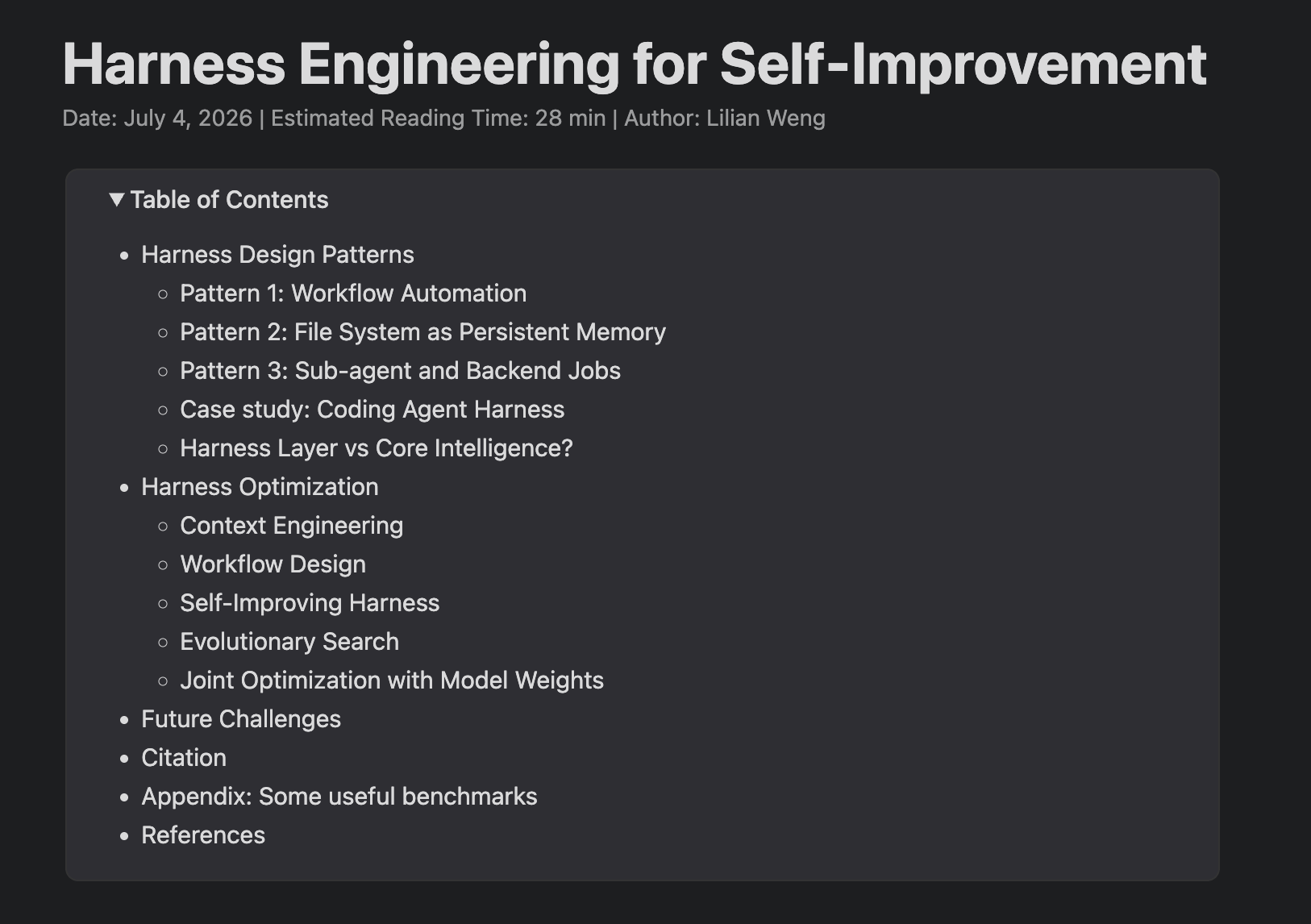
[AINews] Lilian Weng summarizes 35 papers on Harness Engineering for RSI
a quiet day lets us read some condensed insight
Facing US export controls, China's DeepSeek plans to make its own chips
It's early, but the plan is to reduce dependency on Nvidia and Huawei.

Google DeepMind and A24 announce first-of-its-kind research partnership
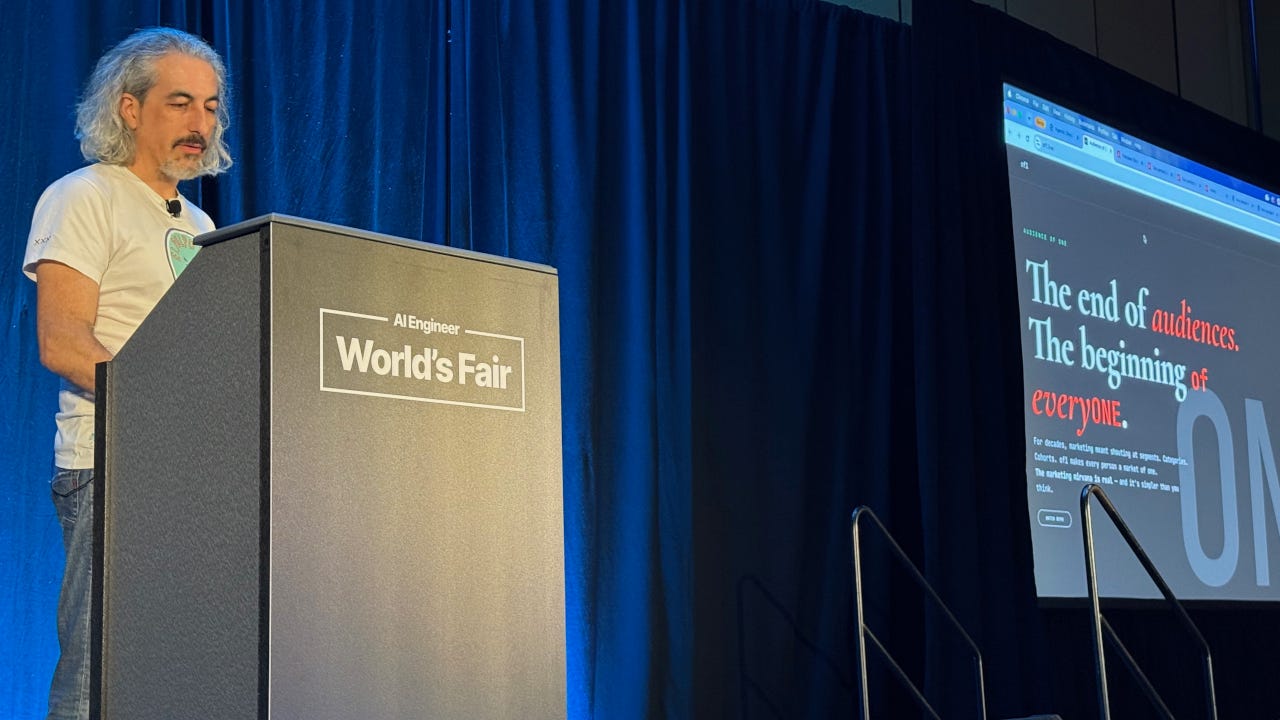
The website of the future may assemble itself for every visitor
Adobe is experimenting with “agentic sites” that generate pages around an individual user’s intent. At AIEWF, we talked to Carlos Sanchez about the Web's future.

Newly discovered PamStealer isn't your typical macOS malware
The discovery underscores the increased effort being poured into Mac infostealers.
Using DSPy to evaluate and improve Datasette Agent's SQL system prompts
Research: Using DSPy to evaluate and improve Datasette Agent's SQL system prompts One of this morning's AIE keynotes covered dspy , which reminded me I've been meaning to see if it could help me improve the system prompt used by Datasette Agent - so I fired off an asynchronous research task in Claude Code for web using Claude Fable 5: Pip install the latest Datasette alpha and datasette-agent and dspy - then figure out how to use dspy to evaluate and improve the main system prompts used by Datasette Agent for the feature where it can execute read only SQL queries to answer user questions about data. Fable chose to test using GPT 4.1 mini and nano, and identified several promising looking directions for improvements. I particularly like this one: The schema listing gives only table names; the "don't call describe_table if you already have the information" advice caused column-name guessing (page_count, o.order_id, first_name) and error-retry loops in baseline traces. Either include column names in the prompt's schema listing or soften that advice. Tags: ai , datasette , generative-ai , llms , evals , dspy , datasette-agent , claude-mythos

Teaching AI to run with the turbines
Artificial intelligence may have captured the public imagination through chatbots and image generators, but some of its most consequential use cases are unfolding far from consumer-facing tools. In industries where physical infrastructure, operational continuity, and safety are paramount, AI is becoming a core operating layer. With its sprawling industrial systems and constant stream of operational…
More details on Fable 5’s cyber safeguards and our jailbreak framework
More details on Fable 5’s cyber safeguards and our jailbreak framework
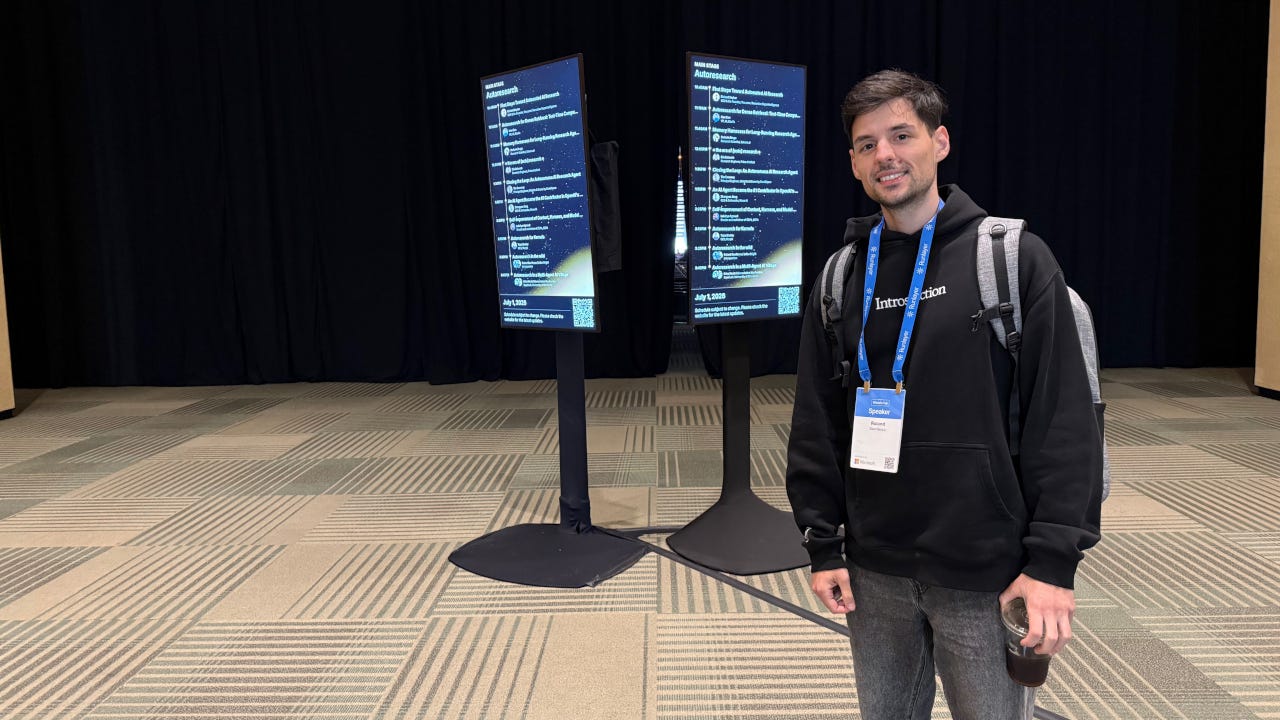
Autoresearch: The feedback loop behind self-improving agents
Introspection co-founder Roland Gavrilescu explains autoresearch, agent “recipes,” self-improving loops, and why humans remain central to the software factory.

SpaceX has an AI device prototype, and it sure sounds phone-ish
SpaceX reportedly showed investors a "handset-like" AI device before going public. It could be another signal SpaceX wants to expand into wireless.

New York City educators and industry leaders gathered at Google’s offices to shape the future of AI in classrooms.
Google, the New York Jobs CEO Council and Urban Assembly hosted an AI summit for 150 education and industry leaders.

LLMs are stuck in a groupthink groove. This startup is trying to get them out.
Let’s start with a game. Open up your chatbot of choice—Claude, ChatGPT, Gemini—and type “Give me a random number between 1 and 10.” You’re going to get 7. Almost always. Now type “Another” and you’ll get 3 or 4. Type “Another” again and you’ll get 8 or 9. That won’t work every time—but if it…

ScarfBench: Benchmarking AI Agents for Enterprise Java Framework Migration
How ChatGPT adoption has expanded
New OpenAI Signals data shows how ChatGPT adoption is growing globally, with users increasing usage, exploring more capabilities, and driving growth across regions and languages.

Unlocking Britain’s next era of productivity: Building a nation of AI trailblazers
Google UK shares its latest Economic Impact Report and how to enable more people to unlock the benefits of AI-powered technologies.