Fresh daily
AI News
Latest AI tool releases, research breakthroughs, and industry news.
Older

Automating cross-repo documentation with GitHub Agentic Workflows
Explore how the Aspire team turns merged product changes into SME-reviewed docs pull requests, closing the gap between release and documentation. The post Automating cross-repo documentation with GitHub Agentic Workflows appeared first on The GitHub Blog.

[AINews] The Field Guide to Fable
a quiet day lets us digest the world's most significant model launch... to date.

Building a World Map with only 500 bytes
Building a World Map with only 500 bytes Iwo Kadziela (assisted by Codex) figured out a way to generate a credible ASCII world map using 445 bytes of data: The key trick is to use deflate compression, which is then wired together using this neat snippet of JavaScript. I didn't know you could use fetch() with data: URIs like this: fetch('data:;base64,1ZpLsgIxCEXnrM...==').then( r => r.body.pipeThrough(new DecompressionStream('deflate-raw')) ).then( s => new Response(s).text() ).then( t => b.innerHTML = ' ' + t ) Via Hacker News Tags: ascii-art , data-urls , javascript
The only AI glossary you’ll need this year
The rise of AI has brought an avalanche of new terms and slang. Here is a glossary with definitions of some of the most important words and phrases you might encounter.
Fable's judgement
One of the most interesting tips I got from the Fireside Chat I hosted with Cat Wu and Thariq Shihipar from the Claude Code team at AIE on Wednesday was to let Fable (and to a certain extent Opus) use their own judgement rather than dictating how they should work. The example they gave was testing. You can tell Fable "only use automated testing for larger features, don't update and run tests for small copy or design changes" - but it's better to just tell Fable to use its own judgement when deciding to write tests instead. Jesse Vincent just gave me a related tip to help avoid burning too many of those valuable Fable tokens in the few days we have left before the prices go up. Tell Fable to use other models for smaller tasks, applying its own judgement about which model to use. I prompted Claude Code just now with: For all coding tasks use your judgement to decide an appropriate lower power model and run that in a subagent Claude saved this memory file in ~/.claude/projects/name-of-project/memory/delegate-coding-to-subagents.md : --- name: delegate-coding-to-subagents description: Simon wants coding tasks delegated to subagents running an appropriately lower-power model metadata: node_type: memory type: feedback originSessionId: 30068d78-43a9-4fb1-bb29-9799e18c526a --- Stated by Simon on 2026-07-03: "For all coding tasks use your judgement to decide an appropriate lower power model and run that in a subagent." Why: cost/efficiency — implementation work rarely needs the top-tier model; judgment, review, and synthesis stay with the main loop. How to apply: when a task in this project is primarily writing/editing code, spawn an Agent with a model override (sonnet for substantive implementation, haiku for trivial/mechanical edits) and a self-contained prompt; review the result in the main loop before committing. Design, auditing, data synthesis, and anything judgment-heavy stays in the main model. See also [[project-goals]]. So far it seems to be working well. I'm getti

How GitHub used secret scanning to reach inbox zero
GitHub had 20,000+ secret scanning alerts across 15,000 repositories. Here's how we separated signal from noise, built remediation workflows, and reached inbox zero in nine months. The post How GitHub used secret scanning to reach inbox zero appeared first on The GitHub Blog.
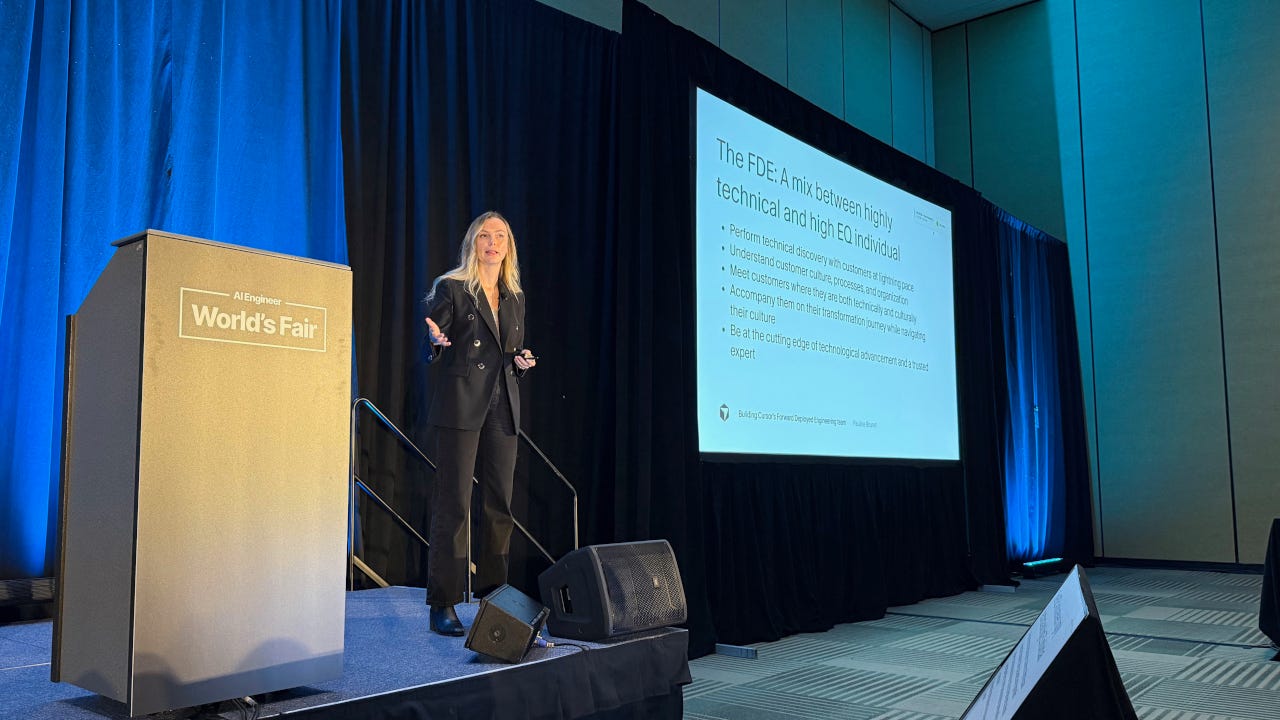
How Cursor deploys AI inside the enterprise
Cursor's Pauline Brunet explains how her team of Forward Deployed Engineers help organizations implement agents — essentially setting up software factories.

6 security settings every GitHub maintainer should enable this week
These six free settings will not make your project unhackable. Nothing will. What they will do is close the easy doors. Turn these on, and your project will be meaningfully harder to attack than it was before. The post 6 security settings every GitHub maintainer should enable this week appeared first on The GitHub Blog.
How GitHub maintains compliance for open source dependencies
Explore how the Open Source Program Office uses GitHub’s new license compliance product to manage open source dependencies at scale. The post How GitHub maintains compliance for open source dependencies appeared first on The GitHub Blog.
How Omio is building the future of conversational travel
Discover how Omio uses OpenAI to power conversational travel experiences, accelerate product development, and transform into an AI-native company.

Shipping huggingface_hub every week with AI, open tools, and a human in the loop

Porting the Moebius 0.2B image inpainting model to run in the browser with Claude Code
This morning on Hacker News I saw Moebius: 0.2B Lightweight Image Inpainting Framework with 10B-Level Performance , describing a small but effective inpainting model - a model where you can mark regions of an image to remove and the model imagines what should fill the space. The released model required PyTorch and NVIDIA CUDA , but since it described itself as 0.2B I decided to try and get it running using WebGPU in a browser. TL;DR: I got it working, and you can try the demo at simonw.github.io/moebius-web/ . Read on for the details. The finished tool Here's a video demo of the finished tool: You can open any image in it (non-square images get letterboxed), highlight areas to remove, click the "Run inpaint" button and wait for the model to do its magic. A parallel agent side-project My main project for today was landing a major feature in Datasette: a UI for creating and altering tables, as a follow-up to the insert and edit rows feature I released last week. I was working on that in Codex Desktop (here's the PR ) and often found myself spending 5-10 minutes spinning my fingers waiting for it to complete a mid-sized refactor or add the finishing touches to a change to the UI. (An amusing thing about coding agents is that the harder a problem is the more time you have to get distracted while you wait for them to finish crunching!) So I decided to spin up Claude Code in a terminal window and see how far I could get at porting Moebius to the web. Some agentic research to kick off the project My first step was to ask regular Claude about the feasibility of this project. In Claude.ai , which has the ability to clone repos from GitHub: Clone https://github.com/hustvl/Moebius/ and tell me if they published the code and weights to run this model anywhere (I hadn't spotted the link to the weights yet, that's tucked away in the "News" section.) Then: For Moebius what are the options for running it right now - Python and NVIDIA CUDA only or other options too? And: Muse on the
Codex-maxxing for long-running work
Learn how Jason Liu uses Codex to preserve context, manage complex projects, and help work continue beyond a single prompt.

We got local models to triage the OpenClaw repo for FREE!*

How we built an internal data analytics agent
Qubot, our internal Copilot-powered analytics agent, allows any GitHub employee to ask questions about our data in plain language. Here's what we learned as we built it. The post How we built an internal data analytics agent appeared first on The GitHub Blog.

Agentic Resource Discovery: Let agents search

What are git worktrees, and why should I use them?
Git worktrees have been around since 2015, but it wasn't until recently they became popular. Learn what they are, how to use them, and why you might. The post What are git worktrees, and why should I use them? appeared first on The GitHub Blog.

GitHub Copilot CLI for Beginners: Overview of common slash commands
GitHub Copilot CLI for Beginners: Learn how to use slash commands to control your terminal AI agent. The post GitHub Copilot CLI for Beginners: Overview of common slash commands appeared first on The GitHub Blog.
New OpenAI Academy courses for the next era of work
OpenAI introduces three Academy courses that help people build practical AI skills, create repeatable workflows, and apply agents in everyday work.
