research
Autoresearch: The feedback loop behind self-improving agents
Builders of AI workflows can apply these principles to create agents that autonomously refine their behavior, lowering the cost of iterative development and enabling more adaptive systems.
What happened
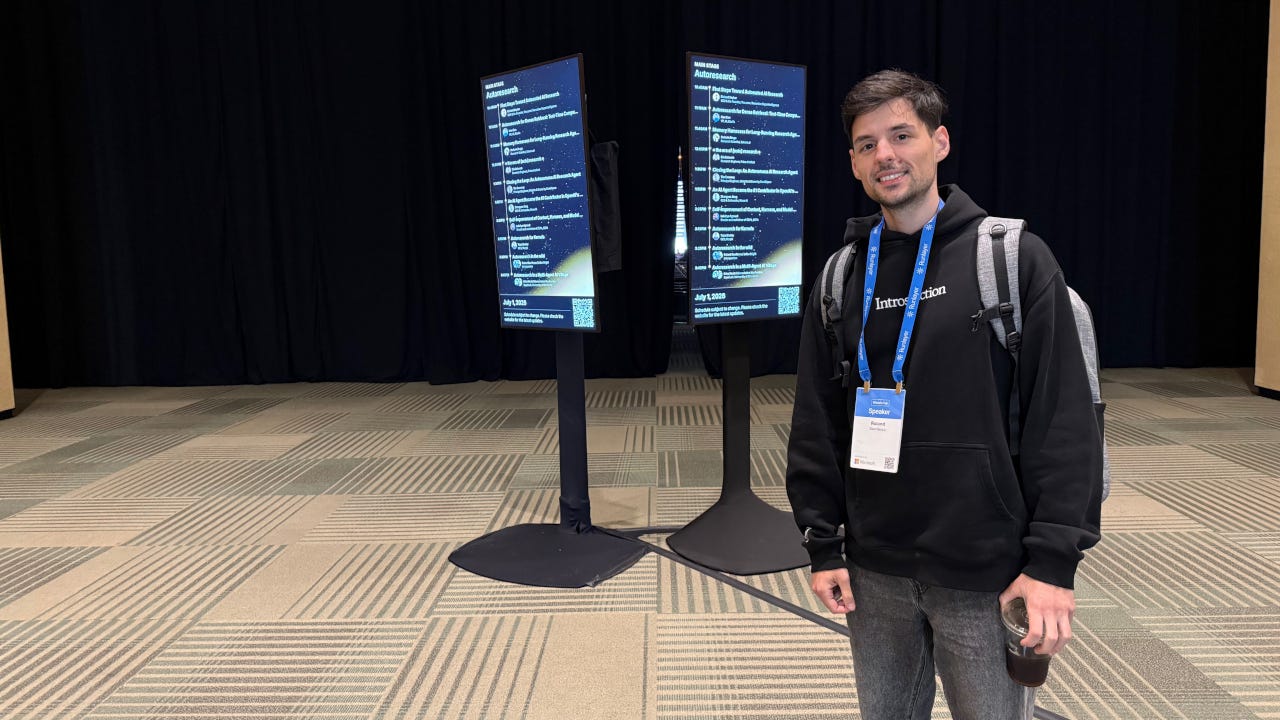
In an interview with Latent Space, Introspection co-founder Roland Gavrilescu outlined the concept of 'autoresearch' – a feedback-driven methodology where AI agents iteratively refine their own performance. He described how agents follow structured 'recipes' that incorporate self-improvement loops, allowing them to adjust their behavior based on outcomes. Gavrilescu stressed that human oversight remains essential, acting as a guiding force and final validator. For developers building AI workflows, this suggests designing systems that combine autonomous iteration with human-in-the-loop review, potentially accelerating development cycles while maintaining quality.
Key takeaways
- Autoresearch uses feedback loops to let AI agents improve their own approaches over time.
- Agents operate within structured 'recipes' that include self-improvement mechanisms.
- Human involvement is still critical for guidance and validation of agent outputs.
- The approach could streamline software development by reducing manual tuning efforts.
Why it matters
Builders of AI workflows can apply these principles to create agents that autonomously refine their behavior, lowering the cost of iterative development and enabling more adaptive systems.
This is an original editorial digest by AI Workflow Center. Full reporting at the source:
Read the original on Latent SpaceMore AI news
All news →

Run Your Own AI Directory