Fresh daily
AI News
Latest AI tool releases, research breakthroughs, and industry news.
Older

PRX Part 4: Our Data Strategy
Reddit is using LLMs to solve a problem LLMs largely created
In the AI era, platforms have no choice but to fight fire with fire to cull spam.
sqlite-utils 4.0rc3
Release: sqlite-utils 4.0rc3 I hoped to release sqlite-utils 4.0 stable this weekend, but as I worked through the backlog of issues and PRs with a combination of Claude Fable 5 and GPT-5.5 the changelog since rc2 kept getting bigger . The biggest new feature is support for introspecting and creating compound foreign keys - a feature that involves a subtle breaking change to table.foreign_keys and hence needed to land for the 4.0 stable release. sqlite-utils also now follows SQLite's convention for case insensitive column names, which turned out to touch a bunch of different places at once . Tags: projects , sqlite , sqlite-utils , annotated-release-notes , gpt , claude-mythos-fable

🤗 Kernels: Major Updates
Government of Alberta uses Claude to find and fix cybersecurity vulnerabilities across government systems
Government of Alberta uses Claude to find and fix cybersecurity vulnerabilities across government systems

Some of the nation’s rich are letting AI teach their kids
Most Americans don't trust AI. It's proven that it doesn't know what safe toppings for pizza are. People don't even want to listen to AI music. But none of that matters for some of America's wealthy, who are turning to AI to teach their kids instead of traditional schools. Companies like Forge Prep and Alpha School are charging families tens of thousands of dollars to turn their kids into beta testers for AI tutors and "interactive project-based workshops." Unsurprisingly, Silicon Valley have been major adopters of this new model. Shaun Johnson, a San Francisco-based venture capitalist, told the Wall Street Journal that he plans to send his … Read the full story at The Verge.
Amazon will stop accepting new customers for Mechanical Turk
These may be the last days of Amazon’s Mechanical Turk.

Infuriating Google commercial imagines the founding fathers embracing AI
I call BS: the founding fathers definitely would have been Microsoft Teams users. | Image: Google "Group project, but make it 1776." That's how a new commercial for Google Workspace opens. And things only get cringier from there. The clip imagines what it would be like if the founding fathers turned to Google's collaboration tools and Gemini to help them draft the Declaration of Independence. Ben Franklin texts Thomas Jefferson to check on the status of a draft, who takes a photo and uses AI to transcribe it into a Google Doc. Franklin and Adams hop in to make edits in suggestion mode, Gemini finds them a meeting time, takes notes during a Google Meet call, and then Nano Banana whips up a seal for the United States featuring a turkey ( … Read the full story at The Verge.
sqlite-utils 4.0rc2, mostly written by Claude Fable
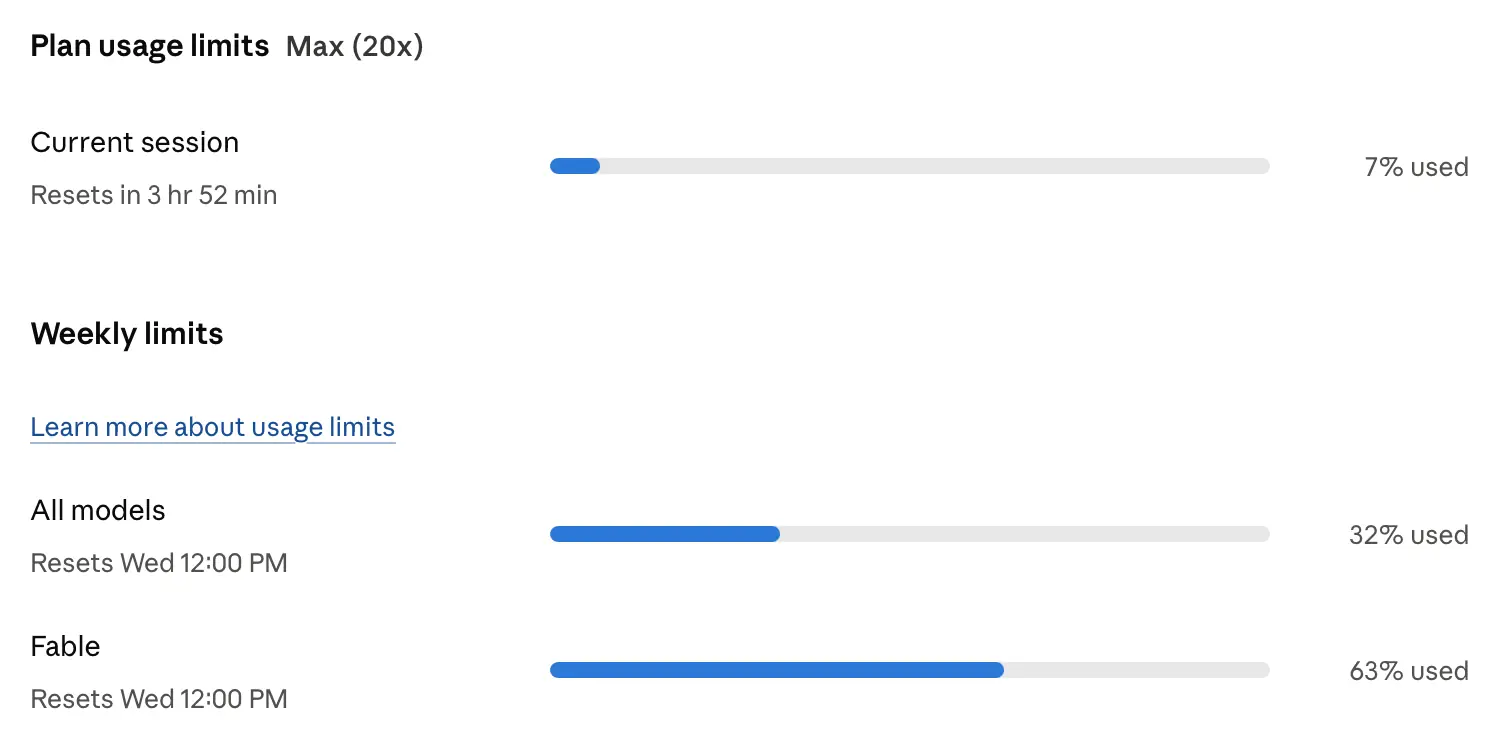
I wrote about the sqlite-utils 4.0rc1 release a couple of weeks ago. Since we only have Claude Fable on our Max subscriptions for a few more days, I decided to see if it could help me get to a 4.0 stable release that I felt truly comfortable about, since I try to keep to SemVer and like my incompatible major versions to be as rare as possible. I started with this prompt, in Claude Code for web on my iPhone: Final review before shipping a stable 4.0 release - very important to spot any last minute things that would be a breaking change if we fix them later Here's that initial report it created for me. There were some significant problems that I hadn't myself encountered yet - 5 that Fable categorized as "release blockers". Here's the worst of the bunch: 1. delete_where() never commits and poisons the connection (data loss) Table.delete_where() ( sqlite_utils/db.py:2948 ) runs its DELETE via a bare self.db.execute() with no atomic() wrapper — compare Table.delete() at db.py:2944 , which wraps correctly. The connection is left in_transaction=True , so every subsequent atomic() call takes the savepoint branch ( db.py:430-440 ) and never commits either. Reproduced end-to-end: db = sqlite_utils . Database ( "dw.db" ) db [ "t" ]. insert_all ([{ "id" : i } for i in range ( 3 )], pk = "id" ) db [ "t" ]. delete_where ( "id = ?" , [ 0 ]) # conn.in_transaction is now True db [ "t" ]. insert ({ "id" : 50 }) db [ "u" ]. insert ({ "a" : 1 }) db . close () # Reopen: rows are [0, 1, 2] — the delete, row 50, AND table u are all gone. That's a really bad bug! Very glad I didn't ship that, although at least it would have been a bug I could fix in a 4.0.1 point release, not a design flaw that would force a 5.0. Over the course of 37 prompts, 34 commits and +1,321 -190 code changes over 30 separate files, we worked through the entire set of feedback in turn, making several other design improvements along the way. A weird thing about coding agents is that harder tasks like this one actual
sqlite-utils 4.0rc2
Release: sqlite-utils 4.0rc2 See sqlite-utils 4.0rc2, mostly written by Claude Fable (for about $149.25) .

Building a World Map with only 500 bytes
Building a World Map with only 500 bytes Iwo Kadziela (assisted by Codex) figured out a way to generate a credible ASCII world map using 445 bytes of data: The key trick is to use deflate compression, which is then wired together using this neat snippet of JavaScript. I didn't know you could use fetch() with data: URIs like this: fetch('data:;base64,1ZpLsgIxCEXnrM...==').then( r => r.body.pipeThrough(new DecompressionStream('deflate-raw')) ).then( s => new Response(s).text() ).then( t => b.innerHTML = ' ' + t ) Via Hacker News Tags: ascii-art , data-urls , javascript
Better Models: Worse Tools
Better Models: Worse Tools Armin reports on a weird problem he ran into while hacking on Pi: The short version is that newer Claude models sometimes call Pi’s edit tool with extra, invented fields in the nested edits[] array. And not Haiku or some small model: Opus 4.8. The edit itself is usually correct but the arguments do not match the schema as the model invents made-up keys and Pi thus rejects the tool call and asks to try again. That alone is not too surprising as models emit malformed tool calls sometimes. Particularly small ones. What surprised me is that this is getting worse with newer Anthropic models as both Opus 4.8 and Sonnet 5 show it but none of the older models. In other words, the SOTA models of the family are worse at this specific tool schema than their older siblings. Armin theorizes that this is because more recent Anthropic models have been specifically trained (presumably via Reinforcement Learning) to better use the edit tools that are baked into Claude Code. This has the unfortunate effect that other coding harnesses, such as Pi, may find that their own custom edit tools are more likely to be used incorrectly. Claude's edit tool uses search and replace . OpenAI's Codex uses an apply_patch mechanism instead , and OpenAI have talked in the past about how their models are trained to use that tool effectively. Does this mean third-party coding harnesses like Pi should implement multiple edit tools just so they can use the one with the best performance for the underlying model the user has selected? Tags: armin-ronacher , ai , openai , generative-ai , llms , anthropic , llm-tool-use , coding-agents , pi
New Google commercial imagines a Declaration of Independence written with help from AI
Two hundred and fifty years after the signing of the Declaration of Independence, a new commercial asks: What if the Founding Fathers had access to Google Workspace?
Midjourney wants Hollywood studios to reveal the details of their AI usage
As part of an ongoing legal dispute with three Hollywood studios, Midjourney is seeking to compel those studios to reveal how they use AI themselves.
Alibaba reportedly bans employees from using Claude Code
Alibaba has reportedly classified Claude Code as high-risk software.
What is Mistral AI? Everything to know about the OpenAI competitor
Mistral AI, which offers some open source AI models, has raised significant funding since its creation in 2023, with the ambition to “put frontier AI in the hands of everyone.”

The fanfiction community is at war with AI — and itself
Fanfiction communities are trying to hunt down writers who haven’t written works with their own hands. | Image: Álvaro Bernis / The Verge Over the past week, a new fanworks movement has kicked off, with the aim to root out authors using generative AI. But the detection methods being implemented are questionable, and any fanfic writer could be caught in the crossfire. Broad distaste around the use of Claude, ChatGPT, and other AI tools has long been a thing in creative communities, including the world of fanfiction. Readers and writers have passed around tips for spotting supposedly AI-generated works, citing anything from em dashes to the broad concept of purple prose. But on June 29th, an anonymous X account called @heatedrivalryai promised a seemingly more reliable solution … Read the full story at The Verge.
Open Source AI Gap Map
Open Source AI Gap Map Current AI is "a global partnership building a public option for AI", founded as a non-profit at the AI Action Summit in Paris in February 2025 and backed by serious capital ($400m already committed). They launched their Gap Map a couple of days ago - an attempt at indexing the current state of open source AI: The Gap Map v0.1 details 421 products in depth: 266 software tools and libraries, 85 models, 50 datasets, and 20 hardware projects, produced by 228 organizations. These products are organized into 14 categories across 3 layers of the stack (model components, product / UX, and infrastructure). The remaining 24,400 artifacts constitute the uncategorized long tail of the open source AI ecosystem, and will carry no score until they are researched and cited. The map itself is interesting to explore, but I'm more excited about the underlying data - released under an MIT license in the currentai-org/os-ai-map GitHub account: 1,184 YAML files plus the notebooks, schemas and other scripts used to help gather them. Since the files are on GitHub you can use Datasette Lite to explore some of them - here are 16,185 GitHub repos the project is tracking as a CSV file loaded into Datasette Lite. Tags: open-source , ai , datasette-lite , generative-ai , local-llms , llms
Quoting Josh W. Comeau
I just launched my third course, Whimsical Animations, and so far, it’s on track to sell roughly ⅓ as many copies as a typical course launch. It’s a similar story with my two existing courses. Sales are down significantly from last year. There are likely a lot of reasons for this, but I think the biggest is AI. There’s sort of a double whammy with AI: Many people are wondering whether developer jobs will even exist in a few months, so they’re reluctant to spend time/money learning new dev skills. Even if they do want to learn new dev skills, LLMs can provide personalized tutoring, so there’s less incentive to buy a paid course. [...] I’ve spoken to a few course creators now, and we’re all seeing the same trend. Revenue down 50%+. Fewer people engaging with our content. People switching to LLMs, which slurp up all of our work and regurgitate it, without consent or compensation. — Josh W. Comeau , via Salma Alam-Naylor Tags: ai-ethics , llms , ai , generative-ai , careers , josh-comeau
The only AI glossary you’ll need this year
The rise of AI has brought an avalanche of new terms and slang. Here is a glossary with definitions of some of the most important words and phrases you might encounter.