Fresh daily
AI News
Latest AI tool releases, research breakthroughs, and industry news.
Older

Nvidia competitor Etched hits $5B valuation, $1B in sales for AI chip
Nvidia AI chip competitor Etched says it has already booked $1 billion under contract for the inference systems powered by its chip.

Anthropic launches Claude Sonnet 5 as a cheaper way to run agents
Anthropic’s Claude Sonnet 5 brings stronger agentic capabilities, lower pricing, and improved safety, positioning the model as a cheaper alternative to Opus, GPT-5.5, and Gemini Pro.

Acti puts AI agents directly into your smartphone keyboard
Acti is betting the smartphone keyboard is the next home for AI assistants. The startup's new keyboard for iOS and Android works across apps and lets users create custom AI-powered shortcuts using natural language.

How GitHub maintains compliance for open source dependencies
Explore how the Open Source Program Office uses GitHub’s new license compliance product to manage open source dependencies at scale. The post How GitHub maintains compliance for open source dependencies appeared first on The GitHub Blog.

Netflix is using an AI-generated Gene Wilder voice in its Willy Wonka reality show
A new teaser trailer confirmed that Wonka's The Golden Ticket will premiere on Netflix on September 23rd, following its Squid Game reality show in the trend of creating real competitions based on fictional torture scenarios. While the sets seen in the trailer are real and not some Glasgow-style AI fakes, the voiceover is AI-generated. Deadline reports that Netflix worked with AI audio company ElevenLabs with consent from Wilder's family, after working on productions re-creating the voice of Michael Caine and Stan Lee. It also continues Netflix's 2021 partnership with the Roald Dahl company, and is separate from the Charlie vs. the Chocolat … Read the full story at The Verge.

Anthropic’s Claude Science bets on workflow, not a new model, to win over scientists
Anthropic's Claude Science is a workbench that gives scientists one environment to do computational research, saving them from the need to bounce between databases, pipelines, and tools.
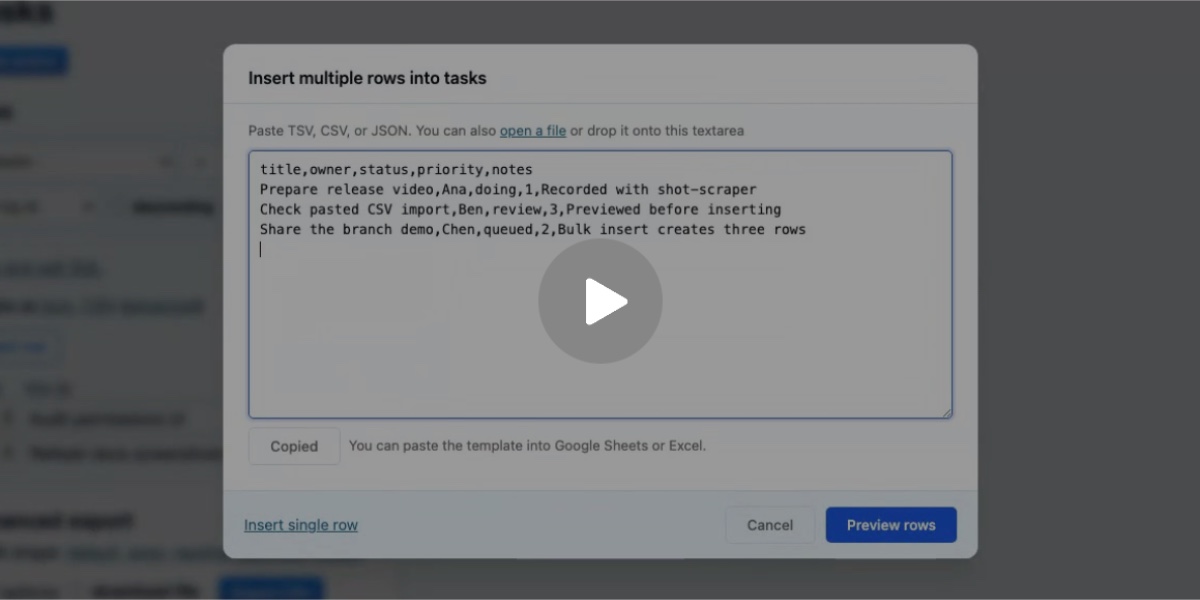
Have your agent record video demos of its work with shot-scraper video
shot-scraper video is a new command introduced in today's shot-scraper 1.10 release which accepts a storyboard.yml file defining a routine to run against a web application and uses Playwright to record a video of that routine. I've written before about the importance of having coding agents produce demos of their work; this is my latest attempt at enabling them to do that. Here's an example video created using shot-scraper video , exercising a still in development feature adding the ability to create new tables in Datasette from pasted CSV, TSV or JSON data: That video was created by running this command : shot-scraper video datasette-bulk-insert-storyboard.yml \ --auth datasette-demo-auth.json --mp4 (That --auth JSON file contains a cookie , as described here in the documentation.) Here's the datasette-bulk-insert-storyboard.yml file: output : /tmp/datasette-bulk-insert-demo.webm server : - uv - --directory - /Users/simon/Dropbox/dev/datasette - run - datasette - -p - 6419 - --root - --secret - " 1 " - /tmp/demo.db url : http://127.0.0.1:6419/demo/tasks viewport : width : 1280 height : 720 cursor : true wait_for : ' button[data-table-action="insert-row"] ' javascript : | (() => { let clipboardText = ""; Object.defineProperty(navigator, "clipboard", { configurable: true, get: () => ({ writeText: async (text) => { clipboardText = String(text); }, readText: async () => clipboardText, }), }); })(); scenes : - name : Bulk insert existing table rows do : - pause : 0.8 - click : ' button[data-table-action="insert-row"] ' - wait_for : " #row-edit-dialog[open] " - pause : 0.5 - click : " .row-edit-bulk-insert " - wait_for : " .row-edit-bulk-textarea " - pause : 0.5 - click : " .row-edit-copy-template " - wait_for : " text=Copied " - pause : 0.8 - fill : into : " .row-edit-bulk-textarea " text : | title,owner,status,priority,notes Prepare release video,Ana,doing,1,Recorded with shot-scraper Check pasted CSV import,Ben,review,3,Previewed before inserting Share the branch demo

Start building with Nano Banana 2 Lite and Gemini Omni Flash

Libby will filter out AI content, kind of
This is Lowpass by Janko Roettgers, a newsletter on the ever-evolving intersection of tech and entertainment, syndicated just for The Verge subscribers once a week. "AI is the new frontier for us," says Marc DeBevoise, who took over as the new CEO of OverDrive last week. OverDrive is best known for the ebook lending app Libby that is available through tens of thousands of public libraries. Like the rest of the digital publishing industry, it's poised to face massive disruption from a huge wave of AI-generated books. To prepare for the AI onslaught, Libby is now getting ready to introduce AI content controls, allowing readers to select in t … Read the full story at The Verge.
shot-scraper 1.10
Release: shot-scraper 1.10 The big new feature is shot-scraper video storyboard.yml , described in detail in Have your agent record video demos of its work with shot-scraper video . Tags: shot-scraper

X now offers an MCP server to make its platform easier for AI tools to use
X has launched a hosted MCP server, making it easier for developers to connect AI applications with the company’s API.

Podcasting platform Riverside enters the newsletter publishing game
Users will be able use AI to create newsletters based on their recordings.

Amazon launches new $1 billion FDE org, following OpenAI and Anthropic
Engineers on the new team will embed within companies to deploy purpose-built agents, focusing on fast deployments and customer self-sufficiency.

Why Specialization Is Inevitable

Lumo, Proton’s privacy-focused AI chatbot, gets an upgrade
Proton's Lumo 2.0 is dropping this week, giving users a broader variety of capabilities.

Agriculture is ready for AI, but its data isn’t
Artificial intelligence is transforming what is possible in agriculture, but industry leaders should be wary of investing in AI without first laying the groundwork. The use cases are promising, especially for an industry navigating volatile fertilizer costs, unpredictable weather, and margins that leave little room for error. Research shows AI-enabled predictive models can improve crop…

Meet the lawyer who beat Elon Musk — twice
“After college, my plan was to come to New York and get a record deal.” | Cath Virginia / The Verge, Getty Images Watching Elon Musk fulminate at Bill Savitt during Musk v. Altman - the case in which Musk sued Sam Altman and OpenAI instead of seeing a therapist about his AI failures - was a bit like watching a toddler have a temper tantrum at his nursery school teacher. Savitt's questions were "designed to trick me," Musk said. He also told Savitt at one point, "You mostly do unfair questions." Savitt, who has the approximate demeanor of a handsome Droopy Dog, gently told Musk, "I am trying to put the questions as fairly as I can. I am doing my best." I've seen a number of styles of cross-examination. Savitt's was mild-mannered and soft-spoken; his q … Read the full story at The Verge.
How ChatGPT adoption has expanded
New OpenAI Signals data shows how ChatGPT adoption is growing globally, with users increasing usage, exploring more capabilities, and driving growth across regions and languages.

Crypto exchange OKX wants AI agents to hire and pay each other
OKX is bringing together payments, identity, and reputation into a marketplace for AI agents.

Unlocking Britain’s next era of productivity: Building a nation of AI trailblazers
Google UK shares its latest Economic Impact Report and how to enable more people to unlock the benefits of AI-powered technologies.