research
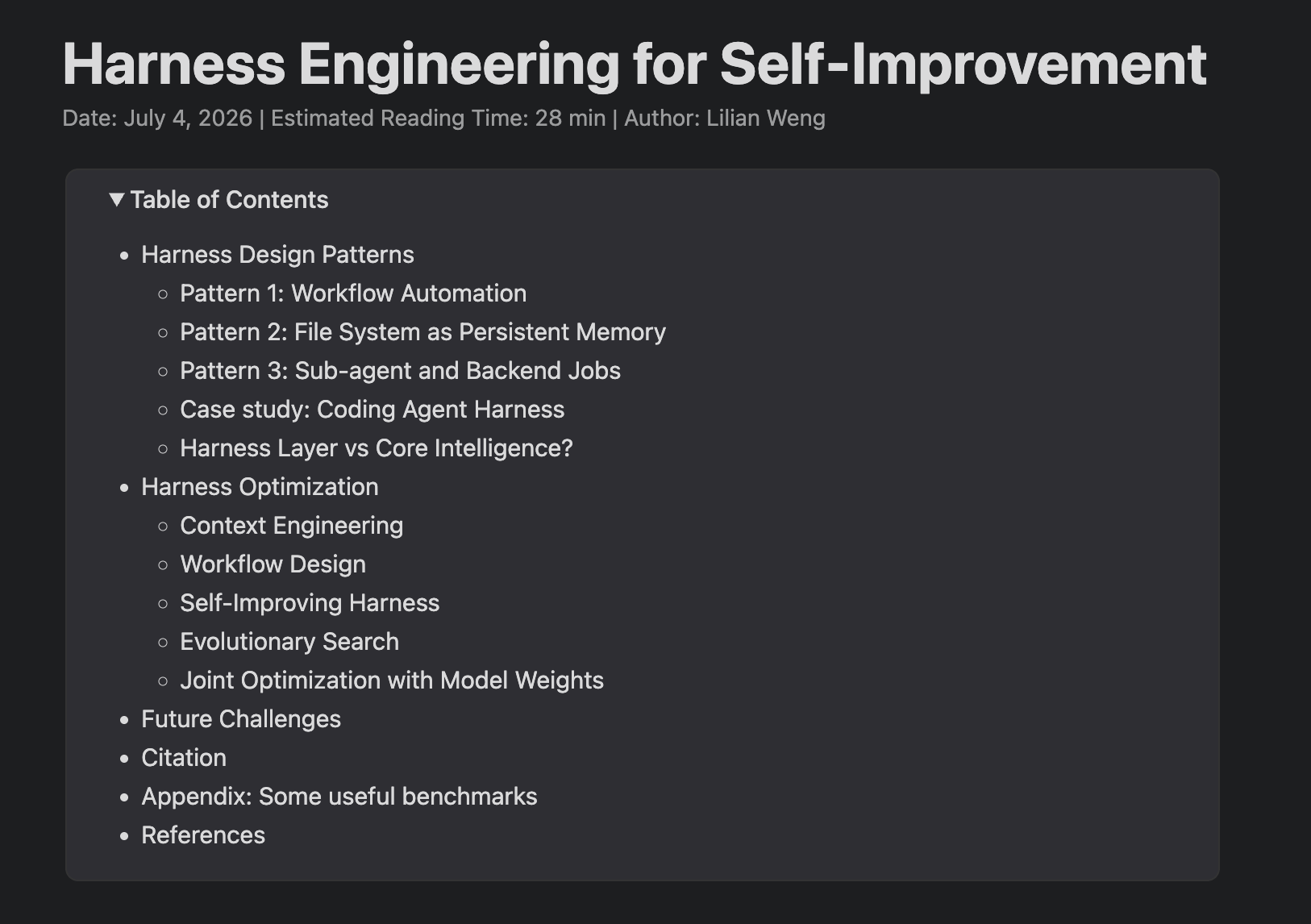
[AINews] Lilian Weng summarizes 35 papers on Harness Engineering for RSI
Builders can use these insights to improve reliability and safety in AI workflows, especially when integrating human feedback loops into production systems.
What happened
Lilian Weng, a prominent AI researcher, has compiled a digest of 35 recent papers on harnessing engineering for reinforcement learning from human feedback (RLHF). According to Latent Space, this collection provides a condensed view of the current state of research in making AI systems more controllable and aligned. The papers span techniques for reward modeling, safety mechanisms, and behavioral steering. For developers building AI workflows, this summary offers a practical shortcut to understanding how to incorporate human feedback loops and safety constraints into models. Rather than reading each paper individually, builders can leverage Weng's curation to identify key trends and methods that are shaping alignment research. The digest reflects the field's growing emphasis on reliable AI behavior, which is critical for production systems that interact with users.
Key takeaways
- Lilian Weng published a summary of 35 papers on harnessing engineering for RLHF and alignment.
- The papers cover reward modeling, safety, and controllability techniques.
- The summary serves as a resource for developers to quickly grasp recent advances.
- Papers are drawn from recent conferences and preprints.
- This reflects the increasing importance of alignment in AI development.
Why it matters
Builders can use these insights to improve reliability and safety in AI workflows, especially when integrating human feedback loops into production systems.
This is an original editorial digest by AI Workflow Center. Full reporting at the source:
Read the original on Latent SpaceMore AI news
All news →

Run Your Own AI Directory