release
datasette 1.0a35
For builders creating AI workflows, Datasette's new schema management APIs simplify data preparation and iteration, enabling programmatic database changes essential for dynamic data pipelines and collaborative data exploration.
What happened
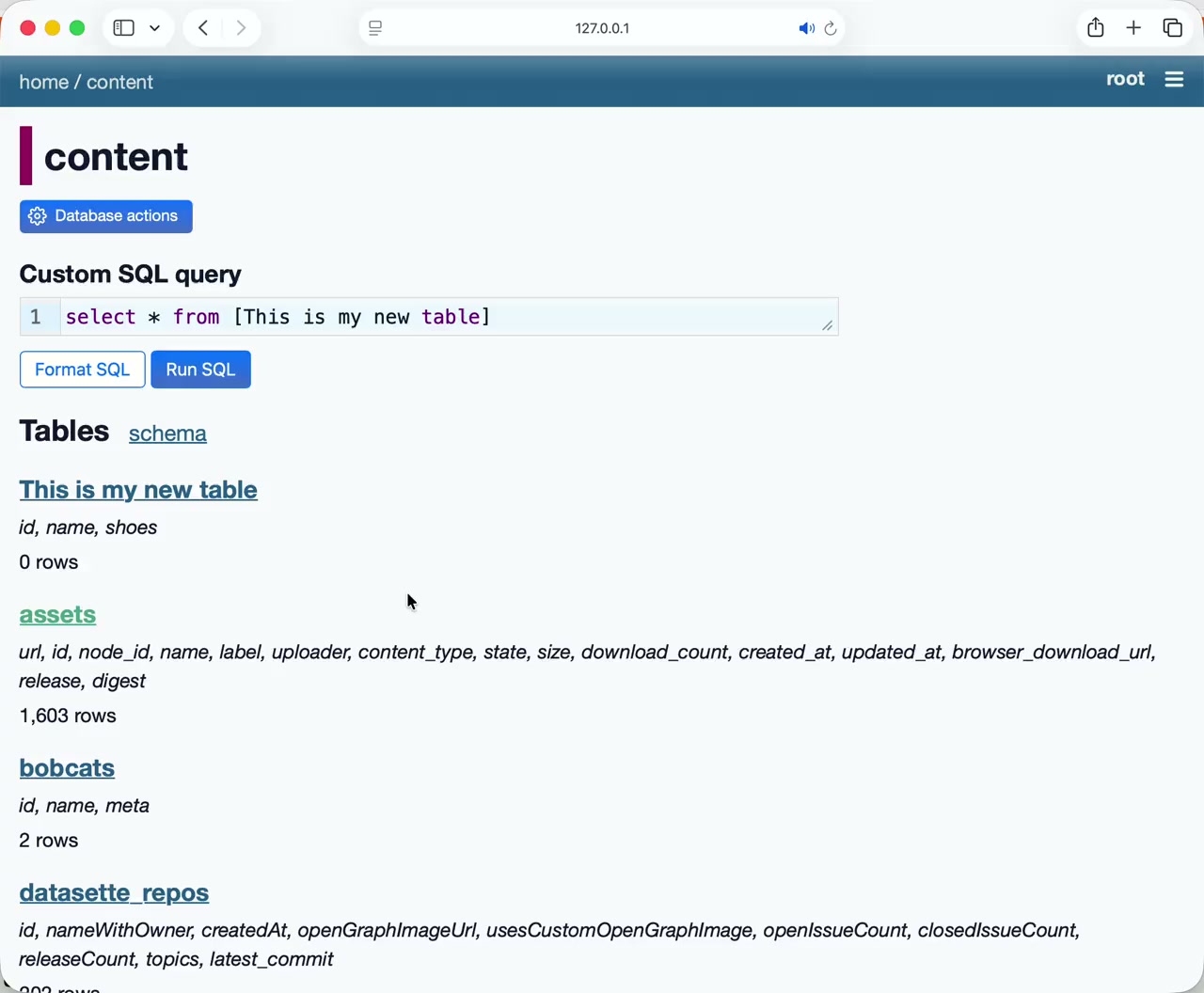
Simon Willison released datasette 1.0a35, a significant alpha update to the open-source data exploration tool. This release introduces a new JSON API and user interface for creating and altering database tables directly from Datasette. The "Create table" interface, accessible via the database actions menu, allows defining columns, primary keys, custom types, constraints, defaults, and single-column foreign keys. Similarly, the "Alter table" action and API support adding, renaming, reordering, and dropping columns, changing types and constraints, and renaming tables, plus a drop table button. Additionally, the release provides stable template context documentation, generated from dataclass definitions and validated by tests, ensuring custom template developers have a reliable API for Datasette's core pages until version 2.0. These features move Datasette closer to a full-featured database management tool, useful for developers who need to quickly prototype and share data-driven applications.
Key takeaways
- Datasette 1.0a35 adds a Create table interface and JSON API for defining schema elements like columns, primary keys, and foreign keys.
- An Alter table interface and API enable adding, renaming, reordering, dropping columns, and changing constraints, types, and table names.
- New template context documentation, auto-generated from dataclass definitions, provides a stable API for custom templates until Datasette 2.0.
- The documentation is tested against actual rendered contexts for database, table, query, and row pages.
- This release was highlighted by Simon Willison as a major step forward in Datasette's functionality.
Why it matters
For builders creating AI workflows, Datasette's new schema management APIs simplify data preparation and iteration, enabling programmatic database changes essential for dynamic data pipelines and collaborative data exploration.
This is an original editorial digest by AI Workflow Center. Full reporting at the source:
Read the original on Simon WillisonMore AI news
All news →

Run Your Own AI Directory