release
OpenAI wants its new tool to do your work for you and with you
Developers building AI workflows can now deploy persistent, autonomous agents that handle hours-long tasks, reducing manual oversight and enabling more complex automation pipelines.
What happened
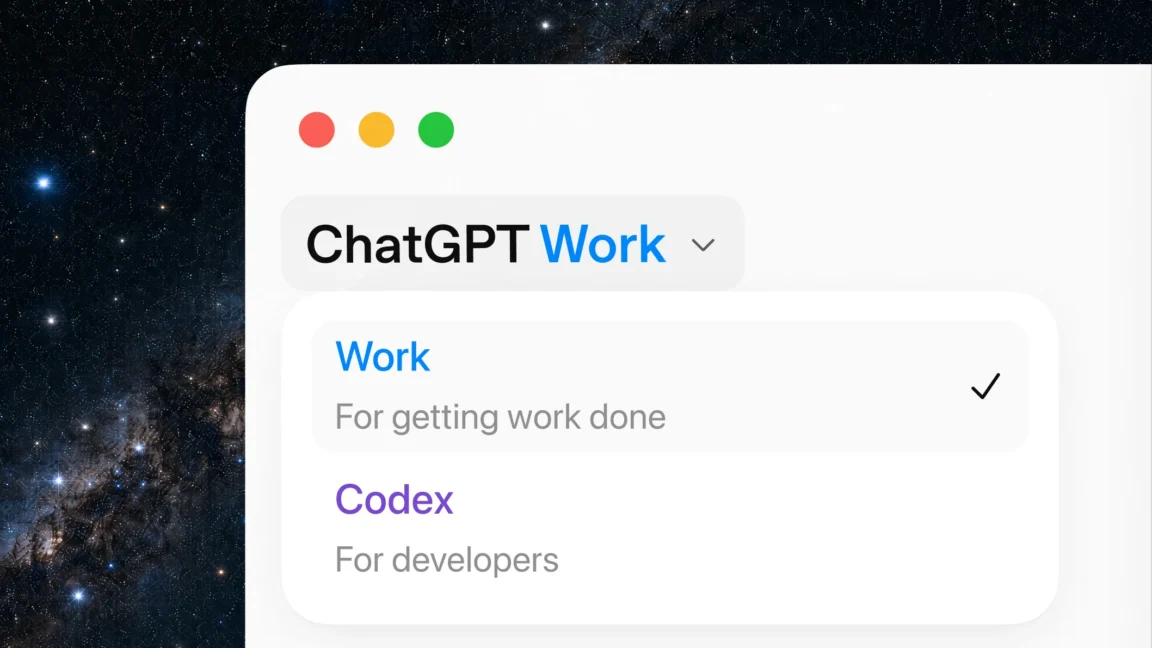
OpenAI has rebranded its Codex tool, shifting its focus from a code-completion assistant to an autonomous workflow system. According to Ars Technica AI, the new version can run independently for hours, handling complex, multi-step tasks without constant human oversight. This marks a significant departure from the original Codex, which was primarily a developer tool for generating code snippets. Now, it appears designed to take on broader responsibilities, such as data processing, content generation, or even orchestrating other AI tools in a pipeline. For builders of AI workflows, this means they can offload longer, more intricate processes to a single system that persists until completion. The practical implication is that developers can now set up long-running AI agents that operate asynchronously, freeing them to focus on higher-level architecture rather than micromanaging each step. This move aligns with industry trends toward agentic AI, where models are given extended autonomy to execute tasks. However, the source notes that it remains to be seen how reliably the tool handles these extended runs without errors or drift. For now, it represents a new option in the toolkit of anyone building automated AI pipelines.
Key takeaways
- OpenAI rebranded Codex as an independent workflow tool that runs for hours without human intervention.
- The tool shifts from code completion to autonomous multistep task execution.
- According to Ars Technica AI, it can be used for complex data processing, content generation, and orchestrating other AI tools.
- This aligns with the broader trend toward agentic AI and long-running autonomous systems.
- Reliability over extended runs remains an open question.
Why it matters
Developers building AI workflows can now deploy persistent, autonomous agents that handle hours-long tasks, reducing manual oversight and enabling more complex automation pipelines.
This is an original editorial digest by AI Workflow Center. Full reporting at the source:
Read the original on Ars Technica AIMore AI news
All news →


Run Your Own AI Directory